The Reynolds brothers - Peter and Paul - collaborated on a picture book about thinking outside the box (literally) and collaboration (ironically)! Going Places stars Raphael and Maya who are excited about their school's "Going Places" contest where every student receives a box-car kit with specific instructions. At first Raphael builds his car by following those directions very carefully, but when he notices Maya is researching nature and brainstorming ideas before she even opens the box, he becomes curious. Together, the two friends work to create something wonderful.
Based upon Fablevision Learning's animated short film Above and Beyond, Peter and Paul (I wonder if they have a sister named Mary) wrote and illustrated Going Places that tells the delightful story about creativity and teamwork. My delightful friend Camille Osborn introduced me to this fun picture book as a retirement present, and I have to say I am inspired by its message. I am "re-purposing" my golden years by doing things I love to do that may or may not be what many senior citizens plan for their 60s, 70s, 80s .... (But I digress, and that's another story.)
There are so many fun activities that teachers can do with their students when using this book as an anchor. As I researched ideas, I found some resources that you and your students may be interested in. Click on the following links to explore a few.
I would LOVE to hear your thoughts about what you might use in your classroom. Please comment on this post or on the JCIRA Facebook page. Have a great, Great, GREAT day!!!
10. You really have NOTHING else to do on Monday night - except collapse from exhaustion. Why not start the process with friends at JCIRA?
9. There will be FREE food! Maybe districts have axed their food budget, but JCIRA has NOT!
8. It's your DUTY to LITERACY! Just in case you're not doing enough already!
7. You're tired of "SEX, lies, and videotapes." (Uh, I mean DVDs and Blue Ray.) You're ready for "TRUTH, JUSTICE, and THE AMERICAN WAY! (But DON'T count on a guest appearance by the man in blue tights UNLESS he's a Utah author or a character in a book!)
6. You can EARN professional development RElicensure points AND lane change credit, IF so desired, to save up for that day when you need to recertify or lane change raises are THAWED!
5. You will rub shoulders with terrific friends and exemplary educators who LOVE literacy and still ENJOY sharing that love with students!
4. You will have the opportunity to "gather and give" - gather new ideas, knowledge, inspiration AND give of YOUR thoughts, ideas, and knowledge!
3. You can WIN FREE BOOKS! Lots and lots of books! NOVELS! PICTURE BOOKS! PRACTIONERS' BOOKS! (And we all know how much we LOVE books!)
2. You can be part of a great service project - BOARD BOOKS for BABIES! It's an easy inexpensive way to give the gift of literacy to the NEWEST generation!
1. You can grow as a teacher, reader, and WRITER because this year JCIRA members can WRITE with PROFESSIONAL writers - thanks to the kindness of several Utah authors who will present to us and work with us! ISN'T THAT A.W.E.S.O.M.E.?
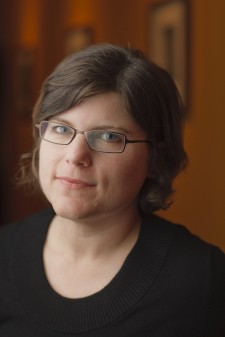
Sara Zarr - isn't that just the coolest author name? And it's NOT even a pen name! Anyway, Sara, the Utah ZARRinaof realistic young adult fiction (and yes, I am fawning) spent over an hour sharing reflections about her writing life with the largest group of secondary educators to attend a JCIRA meeting in YEARS. (Okay, there were only 13, but that's an average improvement of 900% - seriously!) AND, I very much appreciate Sara's comment when I told her NOT to expect huge numbers. She wrote,
Since it sounds like it's likely to be a small group, we can keep it conversational, which is always nice. I just couldn't remember if this was a very formal in-service-y type of presentation or not. Conversational is my favorite.
Rather than summarize all her interesting observations, I'd like to paraphrase several of Sara's thoughts that were meaningful to me. Sound good?
Her genre-of-choice:
Sara is drawn to the family drama - "things happening in kitchens and cars."
When males write "domestic fiction," it's referred to as "literary fiction." (Go figure.)
Her inspiration:
Sara's teen years were influenced by her own family drama - moving around, an alcoholic father, and divorce. She added that children in these kinds of situations often fill their minds with "what if" scenarios - "What if he doesn't come home; what if he DOES and he's drunk, etc." Imagining the "what ifs" can fuel creativity.
Her teen reading was enriched by 80's YA authors, including Robert Cromier, M.E. Kerr, and others. She enjoyed reading about characters who were like her. And while her life did not include the fighting and death found in Cromier's The Chocolate War, for example, she did relate to the dysfunction that realistically penetrates every life.
Her respect for teens:
Sara empathizes with the angst that often fills teen lives. Unlike some adults, she sees their challenges as "high stakes" issues that they "don't have practice in dealing with ... ."
She observes that sometimes it's "easy to look at teens and say 'you don't know how good you have it,'" but their problems "are as real and rough and new" as those experienced by adults.
Adolescence is "a transitional time," and a teen's job is to break away from parents. When going through that, many see their parents as clueless. Sara shared the example of Ann Frank's issues with her own mother - a woman who possessed none of the attributes Ann honored during that season in her life. Had she been allowed to grow up, however, "she would have worked that out. Instead, the moment is frozen in time."
Writers mustn't see teen problems as melodramatic - the "gossip will ruin my life." Authors cannot "dismiss their pain" because if that occurs, they "dismisses what readers are feeling."
Her story goals:
Sara sees adults as "ambassadors of adulthood," saying "come on," and so she wants her books to "model the possibilities." She hopes to demonstrate to her adolescent readers that they can "navigate through" their experiences.
Her desired message is that the way "may not be perfect, but it will be okay."
She wants her books to "offer some kind of hope as long as the definition of family is wide ranging."
Realistically, she knows that her character won't have the "big triumphs" - win the popularity contest, the game, or the piano competition - but will be able to "look Dad in the eye" or have more patience with a well-meaning mom.
Sara also likes to end her stories with "forward momentum" versus the "big wrap-up." Sometimes teens are disappointed in that. Sara mentioned that her 12 to 15-year-old fans "want a happier ending." They also think that the author is writing about her own life. One group of girls Sara met with in California took one look at the visiting writer and then checked out the cover of Story of a Girl . "This ISN'T you!" they exclaimed in surprise. (Yet another disappointment!)
Her inner voice:
Once Sara realized she could be a writer, she knew that she would author young adult books because that is the voice within her. She can see through a teen's eyes. Not as an adult looking back on adolescent experiences but rather as a 15-year-old living in the moment. (I think that is remarkable. I've tried to do it, and the 62-year-old me keeps interrupting the teen me! Darn her!)
One of Sara's author-friends listens to her 6-year-old self, and so I think Ms. Zarr's advice to prospective authors is to discover who resides in their hearts and minds. Next listen and then record who is talking and what is being said. (I was listening more than writing notes at this point, and so I hope I've captured her thoughts about this subject.)
My reflection - I love to write, and I've even written a couple of chapters of a NOVEL - but I have to laugh. My main character is from England - a country I have NEVER visited, but I loudly hear her accent. I think, however, it's more Irish than British. So I started this adventure by writing in a dialect. Can you believe that?
Now I've stopped writing because the accent is growing thicker, and I'm afraid it's losing any authenticity it MAY have had. Awhile ago, I decided to rewrite the chapters and drop the dialect - but that accent is still lodged in my brain.
Dear Sara Zarr, what do you advise? HELP ME!!!
I hope that you enjoy catching a glimpse of our evening with the lovely Ms. Sara. And I plan to bring more such experiences to our JCIRA meetings in the future. I hope you readers of this blog will drop in sometime and mingle with us.
On Monday, May 10th, Sara Zarr - author extraordinaire - sat down with 13 secondary educators to chat about her writing life. What a pleasant experience that was for all of us - those who dream about authoring works and those who enjoy reading them.
Let me tell you a bit about Sara's accomplished WONDERFULNESS, and then I'll link you to a summary of what she sharedwith us! Sound good?
American Library Association Best Book for Young Adults
ALA Quick Pick for Reluctant Readers
International Reading Association Honor Book
International Reading Association Choices Book
New York Public Library Book for the Teen Age
Capitol Choices Pick
TX Tayshas Pick
Utah Book Award Finalist
Sweethearts
2008 Cybil Awards Finalist
Oprah Book Club Kids Reading List
American Library Association Best Book for Young Adults
New York Public Library Book for the Teen Age
Utah Book Award Finalist
TX Tayshas Pick
2010 International Reading Association Choices pick
Once Was Lost - Just published in October, this book was inspired by events surrounding Elizabeth Smart's kidnapping. It has already been recognized with the following honors:
An ALA Best Book for Young Adults
A Kirkus Best Book of 2009
Fall 2009 Reading the West pick – Mountains & Plains Independent Booksellers Association
Sara has also contributed to the following collections:
Does This Book Make Me Look Fat - A collection of stories and essays by YA authors that "sound off on body image., self-esteem, diets, eating disorders, boys, fashion magazines, and why trying on jeans is a bad experience for everyone."
Geektastic - "Short stories from some of the best selling and most promising geeks in young adult literature; covers all things geeky, from Klingons and Jedi Knights to fan fiction, theater geeks, and cosplayer."
Jesus Girls - "Together this collection of essays provides a vivid and diverse portrait of life in the evangelical church, warts and all."
Sara is featured on a READWRITETHINK.org podcast.
Click HERE to learn more about this amazing young author via the podcast.
Over 200 new mommies who deliver babies at the Riverton IHC Hospital will receive little gifts with great potential: bags of board books to encourage reading to their little ones from the very beginning of their lives.
At the March 8th Jordan Council of the International Reading Association (JCIRA) meeting, members quickly assembled the bags that included a board book and a letter sharing research about the benefits of reading to children, starting at babyhood. In 20 minutes, approximately 20 participants folded letters, packed books, and tied bags to ready the gifts for delivery. (Pictured: Bev Griffith, R.S., Arlene Baumgardner, Becky Lind.)
On April 19th Susan Snow, Lori Huey, and I delivered many boxes filled with bags 'o books to hospital representatives. (I would have inserted a picture of that occasion if it had not turned out to be VERY out of focus. I would have also listed the names of the hospital's representatives if I had remembered to jot them down.)
Right now the labor and delivery, mom and baby care areas of the Women's Center are not operating at full capacity. Once they are, representatives indicated ABOUT 200 babies could be born each month. That means our donation will only last 30+ days!!! Consequently, we've decided to make this an ongoing project as we realize that MANY of the babies born at Riverton IHC this year will enter our schools in years to come! We want them to walk through our doors as lovers of literacy!!
The following is a "CopyPaste" version of the letter we enclosed with the books. You might find the research and the suggestions of interest.
Congratulations on the Birth of Your Baby
On behalf of the Jordan Council of the International Reading Association, our members present this board book to you and your little one because there are few gifts that outshine the gift of literacy! We know the importance of reading to your baby from the earliest possible moment, and we want you to share some of those reasons with you.
Reading to infants and toddlers can be very beneficial because it establishes a strong foundation for later literacy skills (McLane & McNamee, 1991). Little ones grow up believing that reading is fun to do as they become comfortable with the sound of language used in books. They learn to turn the pages and soon realize that printed words on pages have meaning (Rice, Burkes, & Kaplan-Sanoff).
After a few months of reading together, a baby’s face lights up when looking at favorite picture books. Before long squeals of laughter follow Mommy expressive narration, “Brown Bear, Brown Bear, what do you see?” Eventually, chubby fingers point at colorful illustrations; and by the time baby is a toddler, Mommy hears her little one share the story through imitated words and sound effects.
A parent can also help young ones make connections beyond the printed page: “Here is YOUR soft brown bear. He looks like the bear on this page, doesn’t he?” Babies bask in the sense of closeness they feel in the arms of their parents. They respond to the sound of a mommy’s voice and the comfort of being held. They learn from peeking at the pictures, listening to the sounds, and interacting with the reader.
Realizing that all children develop at different rates, parents can refer to these guidelines published by the Corporation for National Service [CNS], U.S. Department of Education, & U.S. Department of Health and Human Services for some suggestions.
Birth to Eight Months
·Hold the baby in your lap as you share short books with bright pictures.
·It’s normal for the child to want to handle the book and even chew on it. Use cloth, plastic, or board books that can be cleaned after each use.
·Name pictures for the baby and respond to the baby when he/she points to the pictures.
Eight to Eighteen Months Old
·Continue to read one-on-one. Children this age love to hear the same book again and again.
·Follow the child’s lead. When the child brings you a book, do your best to find time to read it.
·Relate pictures in the books to the child’s life.
·Keep sturdy books within the children’s reach for them to explore on their own.
·Offer books about everyday activities. Make some books yourself that include photos of the children.
Eighteen to Twenty-Four Months Old
·Read to the children both one-on-one and in small groups, but don’t insist that the children stay in the group.
·After hearing the same book often, the children will begin to join in and tell what happens next.
·Point to the words as you read.
·Encourage the children to talk about the stories. Add related props so the children can incorporate the stories into their play.
Our very best wishes to you and your new baby!
Jordan Council of the International Reading Association
Yes, April is National Poetry Month. Established in 1996, the Academy of American Poets dedicated this month to celebrate poetry in schools, libraries, book stores, and literary organizations throughout our country.
There are so many events transpiring, and one of my favorites is following "30 Poets 30 Days." Well-known poets share some of their unpublished poems. (Cool, huh? And there are some AMAZING verses found there!) Some of our schools sponsor Pocket Poetry where EVERYONE carries poems in their pockets, and then they recite those poems at every possible chance. Other schools, like West Jordan High, hold Poetry Slams during April. (I can't wait to attend! So fun!)
Jordan Council of the International Reading Association (JCIRA) invited Brad Wilcox, author and BYU professor, to commemorate this fun occasion by speaking about the "What, Why, and How" of teaching poetry to our students. Here is a summary of what he shared with members at the April 12th meeting.
What is Poetry?
"Pretty thoughts dressed up in pretty words." ~ Val C. Wilcox, Brad's mother who knows EVERYTHING!
Poetry is orange juice CONCENTRATE; if you add the 3 cups of water, you have prose." ~ Brad Wilcox, who listens to his mom!
"A poem begins more felt than thought, and ends more thought than felt."
AND "Poetry begins with a delightful experience that becomes wisdom." ~ Robert Frost
"Poetry is music in words and music is poetry in sound." Wm. Wordsworth
"If I feel physically as if the top of my head were taken off, I know it is poetry." ~ Emily Dickinson
Why Poetry?
Why Poetry Indeed?
by Alex Nobel
Why poetry? Why indeed? Why life? Why communication? Why awareness? Why growth? Why sharing? Why love? I like to think of a poet as one who understands the unversal harmony and beauty of things .... This poet-possibility resides in each of us. In me. In you. You will find your way. I will find mine. And it will be a beginning.
Why poetry?
BRAD'S practical reason: Because poems are short, teachers and students can work through the ENTIRE writing process in a short amount of time.
Renae's reason: Poetry is a GREAT way to teach word choice because each and every syllable must be carefully chosen to share the just-right message.
How to Teach Poetry?
Note: Brad shared these ideas with elementary students in mind, HOWEVER, I have used them to inspire RELUCTANT poets. While my students published traditional and fun formula poems, I also gave them opportunities to create and publish original poetry that didn't fall into any formula but their own. Remember that CHOICE is ALWAYS a great MOTIVATOR!
REMEMBER "to, with, and by!"
Read poems TO students.
Write poetry WITH them and have students work WITH writing buddies/peers.
Time to write poetry BY themselves.
Build word banks: Brainstorm "spring" words, "school" words, "color" words; "sad" words, etc. Then encourage your poets to incorporate them into their creations.
Publishing:
When Brad creates poems WITH students, he assigns groups of students to rewrite a line and create an accompanying illustration, create a cover and a title - each student completes one part of the assignment. The end result is 3-5 different books of the class-created poem.
When students work in partners or individually, each poet or pairs of poets makes copies enough for every student in the class. Then he stacks the piles across a long table or several desks. Students line up and walk by, each taking a copy from every stack. Next they staple and VOILA a class book to present to moms, grandmas, etc.
My students organized their poems into their own books. Here isa link to my personal blog, ... good times AND seasons ..., that shares some poetry from the book I created along with my students. It also includes samples of cinquain, Haiku, and concrete poetry.
Traditional Poem Ideas: I did not include Haiku or Cinquain poetry because they are familiar to most teachers. And perhaps you've also experimented with some of the following, but if not, here they are.
Couplets:
Ex. 1
Teacher: Give me 2 rhyming words.
Students: RAY and DAY
Teacher: Let's create two statements using these words at the end.
Students and teachers: In our class is a boy named RAY; he celebrates his birth this very DAY!
EX 2:
Teacher: Give me another word.
Student: HIAWATHA
Teacher: O----kay. I need one more word and then let's come up with another couplet.
Student: FRIEND
Students and teacher: HIAWATHA is our FRIEND; he'll be loyal till the end. (Note: The difficult word is at the BEGINNING of the couplet's first line.)
Literary Example: "What's with that crazy BELLA that she wants a vampire for her FELLA?"
Seasonal Example: When Halloween comes 'round, assign students to write "gravestone" couplets.
Irish Blessings: Use 4 "MAYS" along with an "AND" to create an Irish Blessing for St. Patrick's Day, why don't ye?
Here's a famous blessing for a model:
MAY the road rise up to meet you,
MAY the wind be always at your back,
MAY the sun shine warm upon your face, the rains fall soft upon your fields,
AND, until we meet again,
MAY God hold you in the palm of his hand.
Renae's not-so-famous blessing:
May your students rise to cheer you,
May your colleagues watch your back,
May the recession wane in coming days; the budget cuts be forever misplaced,
And, until school starts again,
May summer caress your weary bones and tired minds.
Free Verse; Using a thesaurus, create a PLETHORA of word strips with one word on each.
Writing WITH students -
Pull 5 from the stack of words.
Work with students to create 2 or 3 sentences using each of the 5 words.
Quickly revise and edit the sentences - eliminating and/or rearranging words.
Poetry Poker
Distribute 5 word strips to poet-partners
Allow each partnership to trade ONE strip for another still in the "dealer's" hand
Assign partners to create their own poem, using the 5 selected words.
Other Fun Ideas
ABC poem - uses all or some letters from alphabet
Definition poem - ____________________ is ______________________.
Anxiety is an alien gnawing on you from the inside out.
"Love is never having to say you're sorry." (Name that movie!)
5 W poem - Who, what, when, where, why: complete the questions in a unified structure.
Mrs. Crumple
broke her yard stick
in 6th period
on Riley's desk
to wake him up.
List poem - Pull out key chain, backpack, pockets and list contents along with a comment about each.
This key fits the lock to a house I no longer live in,
and this one goes to the PT Cruiser I named CreamPuff.
This key opens my desk drawer where I hide my chocolate covered almonds.
This key ... this key... Hmmm? Who knows what this key opens?
Phone number or zip code - Vertically list a phone number that WON'T impose on anyone's privacy, like the school's, for example. Or list a zip code.
Each number indicates the number of words needed on that line.
If zero is listed, add a 1 before it for 10 or after it to indicate ONE.
8 words:
4 words:
01 word:
8 words:
4 words:
WHEW! This post ended up being MUCH longer than I planned, but hopefully, you will find some ideas to try during National Poetry Month!

 The Reynolds brothers - Peter and Paul - collaborated on a picture book about thinking outside the box (literally) and collaboration (ironically)! Going Places stars Raphael and Maya who are excited about their school's "Going Places" contest where every student receives a box-car kit with specific instructions. At first Raphael builds his car by following those directions very carefully, but when he notices Maya is researching nature and brainstorming ideas before she even opens the box, he becomes curious. Together, the two friends work to create something wonderful.



.JPG)