Friday, June 25, 2010

Book Affair at Valley High School!

Schools throughout the Jordan School District celebrate literacy in a number of ways. Middle schools like Elk Ridge Middle invite local authors to spend an evening with students and their parents to learn more about the joys of reading and writing. West Jordan High sponsors a very popular Poetry Slam that runs for 3 days. Valley High also holds a Slam, but for the seven or eight years, they have also promoted literacy by holding Book Affair.

According to Terry Jensen, English teacher at Valley, Book Affair was someone else's brainchild, but Terry soon took over and has chaired the annual event ever since.The purpose was to celebrate READING for LIFE and READING for PLEASURE. Organizers want students to know that reading remains a part of people's lives beyond formal schooling.

Initially, administrators and teachers, staff members and some students shared their favorite books with students. More recently, however, Terry expanded the program to feature state and community leaders as well as published authors. A few years ago, Sharon Jensen, former assistant principal at Valley, suggested a book give-away to further motivate students to read the featured books. Using a portion of Trustland funds, Valley gives away scores of favorite titles!

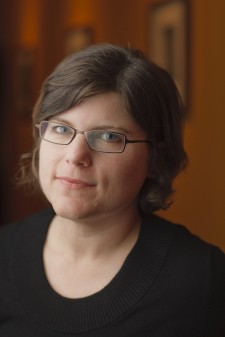
This year's presenters ranged from a school board member to a manager of the King's English Book store. Here are some book picks and presenter pix to share with you.

Terry Jensen, presented at least a dozen of his favorite titles and introduced Madeline Stout who shared her favorite book - The Earth, My Butt, and Other Big Round Things by Carolyn Mackler. Madeline enjoyed the book's humor, but even more, she appreciated that she learned the deeper meaning behind self image, and misguided ideas of perfection. The PRINTZ Honor book also talks about measuring up to family's expectations and asks teens to avoid being so hard on themselves.

J. Dale Christensen, a member and former president of JSD's  Board of Education, talked about the importance of reading and then told students about the non-fiction best-seller, 1776 by David McCullough.

Principal of Valley High School, Don Link, honored J.D. Salinger by talking about the first time he read Catcher in the Rye - the quintessential and controversial "coming of age" story. As Salinger passed away in January, this was especially appropriate. Mr. Link also recommended Salinger's Nine Stories, a collection of short stories.

Vickie Bork, school psychologist talked about The Boy Who Harnessed the Wind  about William Kamkwamba, a young man in Africa who "built a windmill to elevate the lives and spirits of those in his community." The book demonstrates how just one person can make a difference in the world, regardless of age.

Deseret News journalist, author of The Loser's Guide to Life and Love, and MOST IMPORTANTLY, my blogger friend Ann Cannon recalled a day spent at a book shop in a near empty mall where she stumbled onto Fellowship of the Rings by J.R.R. Tolkein. That day she picked up a fantasy, even though she hated that genre; read the the prologue, which she NEVER DOES; and read a description of little people with big hairy feet. She was grateful that she overcame all those prejudices, including ones about feet, to read this classic.

Sharon Jensen's favorite book is The 4 Agreements: A Toltec Wisdom Book by Miguel Ruiz. The book suggests 4 ways of handling one's self in order to achieve personal freedom. They are as follows:
  • Be impeccable with your word. (Spot on) (positive)
  • Don't take anything personally - what people do is NOT because of you.
  • Don't make assumptions about others.
  • Always do your best - no MORE and no LESS. 
Lisa Kolstad, creative writing teacher at the high school keeps 3 journals near her bedside. One is her personal journal; another is her "managing anger" journal, and the 3rd is her writing ideas journal. Because of her love of journaling, Lisa recommended The Story Sisters by Alice Hoffman. The novel is about the reuniting and reconcilation of 3 sisters whose lives have been laced with tragic chaos.

Margaret Brennan from THE KINGS ENGLISH, highly touted I Sang to the Monster, but she also recommended many other great reads, including the following with the disclaimer that not all of these titles are for young adults and include some heavy and/or adult themes.
  • Little Bee 
  • Adoration of Jenna Fox
  • (NOT Faux as I originally spelled it!)
  • Things Fall Apart 
  • Th1rteen R3asons Why
  • Reluctant Fundamentalist
  • Sarah's Key
  • Never Let Me Go
  • Beyond the Sky and Earth
  • Left to Tell: Discovering God Amidst the Rwandan Holocaust
  • No Shortcuts to the Top
  • Escape
  • Infidel
  • 19 Varieties of Gazelle: Poems of the Middle East
  •  Between a Rock and a Hard Place
  • Wintergirls 
  •  Escape 
One of the surprising highlights was Mark and Caralyn Buehner's presentation. The husband and wife/illustrating and writing team shared their experiences in publishing their well-loved picture books, including Snowmen at Night and Dex:The Heart of a Hero. The students particularly enjoyed listening to Cara read Dex, and I heard a collective sigh from the audience when she shared the sweet ending.

The office ladies have organized their own book club and present their favorites every year at Book Affair.

Sara Zarr usually presents at B.A., but could not this year. Instead, she recommended Ann Dee Willis and Emily Wing Smith as presenters. Both young authors held the teens' attention even at the very end of the day as they talked about the influence of their favorite authors on their writing.

The simplicity of Sandra Cisernos's House on Mango Street motivated Ann Dee to dedicate a summer to writing and finishing her first book,This is What I Did. Ann Dee's first novel "received three starred reviews and was listed on Voice of Youth Advocates - 2007 Top Shelf Fiction for Middle School Readers List, American Library Association Best Books for Young Adults for 2007 and was a 2008 International Reading Association honor book. Her second book, Everything is Fine was released March 2009. Kirkus described the book as 'Impressionistic, elliptical and full of feeling' and VOYA (starred review) called it 'a story so painful you want to read it with your eyes closed. It is a stunning novel.'”

Emily Wing Smith published her first YA novel, The Way He Lived, in 2007, and her second book is due out soon. The author quoted her favorite author M.E. Kerr's observation that writing helps young adults work through tough experiences and get back to where they want and need to be. Loosely based upon an incident that happened during her high school years, Emily's novel revolves around peers' perceptions of a young many who died one summer. Seen as a martyr by some and self-destructive by others, the protagonist is all and none of what others think of him.

"The Way He Lived received accolades including a starred review in Publisher’s Weekly. It was also winner of the Utah Book Award in Young Adult Fiction. Her next YA novel, Back when You Were Easier to Love, will be released from Dutton (Penguin) early next year."


Kay Erickson and Mark Murphy, faculty members at Valley, wrapped up Book Affair by promoting their favorites: The Greatest Generation, a book Kay recommends because her dad was a WWII vet who never talked about the war. Magnificent Obsession, written by Lloyd C. Douglas and published in 1929, has been been his favorite job for 40 years. The classic nspired him to be of service to others, and Douglas' novel also touched my life some 35 years ago when I read it. It's one whose message I will never forget.

This summer my reading goal is to consume as many books by Utah authors as I can. They include Ann Dee's and Emily's, as well as Carol Lynch Williams' book The ChosenI recently finished Jessica Day George's fairytale-fantasy Princess of the Midnight Ball, and I am anxious to start Bree DeSpain's The Dark Divine.

Oh, and I won't let summer end until I read Ann Cannon's The Loser's Guide to Life and Love and The Chihuahua Chase!

Sunday, May 23, 2010

wRITING REASONS ~ The First of MANY Posts

Inspired by Kelly Gallagher's Reading Reasons, I have been contemplating why we write. Using a similar format as the esteemed Mr. Gallagher, and withOUT his permission, I will share a few ideas that wake me at night and distract me by day.


THE CHALLENGE 
If educators were ONLY concerned about test scores, then we would be overwrought about our students' writing results as reported by the National Assessment of Educational Progress (NAEP). NAEP, considered the Nation's report card, indicates that Utah's READING scores are "pretty good," but students' WRITING scores are significantly lower than students nationwide.
Like most teachers, however, I have a difficult time standing before a classroom of students to tell them that the main reason they need to be better writers is because they have GOT to earn better scores on standardized tests. Yes, some would be motivated by this concern, but many - if not most - would not. (Starting in the 2010-11 school year, we do not even have the UBSCT writing assessment to hang over high schoolers' heads.)
On the other hand, NOT many students challenge the necessity of learning to write like they question other kinds of learning: "I'll NEVER write in the real world." Too many, however, fail to realize how much required writing or the expected high level of writing they will encounter after leaving public school - whether it's college or career-related.
The questions about writing, therefore, are similar to those posed about reading:
    • How do we turn around apathetic attitudes about writing?
    • How do we address an unwillingness to draft, revise, revise, revise, and edit?
    • How do light a writing fire under our students?
    • How do shelter fragile adolescent writers and help them grow into confident people for whom writing well matters?
    • How can we meaningfully and consistently reinforce the benefits of writing and writing well?
    • Where do we start?
BUILDING READERS
Just as educators need to explicitly teach READING REASONS to students, teachers must also EXPLICITLY teach WRITING REASONS to their pupils. By the time adolescents are in middle school and/or high school, we assume that most of them understand the importance of writing. As a result, we assign the essay or the reflective written response without explicit instruction that includes the reason.
Furthermore, the strong emphasis upon summative assessments, along with accompanying administrator and teacher angst, supports the less important reason for writing - scoring well on the Direct Writing Assessment or some other summative test. It is important that educators ensure that students know and understand there are much stronger reasons for learning to write effectively.
As with reading, before teachers and students discuss, discover, and develop solid and motivating writing reasons, building blocks must be in place to support young writers.
Building block 1: Students must experience many different kinds of writing, including WRITING TO LEARN and LEARNING TO WRITE a variety of genres. Among the traditional kinds of writing taught in schools, the National Common Core State Standards (NCCSS) requires students to be proficient in writing effective ARGUMENTS. This type of writing is different from creating persuasive pieces of writing but is used more in ALL disciplines.
Building block 2: Students must have ample time to compose, especially extended pieces of writing. They must be able to draft, review with peers, revise, edit, and PUBLISH.Thinking and drafting take TIME; reviewing and revising take more TIME because writers often go through this step again and again.
Building block 3: Teachers must model writing and the VALUE of writing. Composing, sharing, revising and editing with students, and thinking aloud while working through the process makes the writing process more transparent for students.
Demonstrating a positive attitude about writing is crucial! Too many teachers lack confidence in their own writing; consequently, they may AVOID teaching writing or LIMIT the number of writing assignments.  Tracy Gardner, NCTE Inbox editor writes, "YOU are a WRITER when you BELIEVE that you ARE—and once PEOPLE BELIEVE they are WRITERS, they are ON THE PATH to a life-long LOVE of WRITING."
Building block 4: Teachers must STOP GRADING EVERYTHING. The paper-grading horror stories that follow English teachers not only scare away prospective language arts teachers, they also discourage educators from assigning writing. Because students hang from fluorescent lights in Utah's classrooms, grading EVERY essay, response, or narrative is especially daunting. BUT there are many ways to effectively assess student writing and learning WITHOUT grading every paper. Rather than limit writing, teachers need to PICK and CHOOSE what they will and will not grade. This can be accomplished without diminishing the value of all student writing.
Additionally, Utah Write and MY Access online writing programs are available to support student writing by providing feedback. When used correctly, these tools ASSIST teachers; they DO NOT REPLACE teachers!
Building block 5: Teachers must incorporate writing into MOST aspects of learning. WRITING to LEARN includes tools that help students process learning through writing. Some of these tools include graphic organizers, admit/exit slips, R.A.F.T., Silent Discussions, etc. A new report from the Carnegie Institute, Writing to Read: Evidence for How Writing Can Improve Reading, shares recent research that supports the importance of writing to the reading process.
Building block 6: Students must WANT to write, and they MUST see what's in it for them. Too many young people believe that writing is only important in the academic world. The second part of "wRITING REASONS" will share why we write - reasons that go beyond those connected to school.
While I have some ideas, I plan to search out more; and I would LOVE to hear YOUR ideas. Please share your thoughts with Link2Literacy, and then teachers can share them with future students.

Thanks so very much.
Renae

Wednesday, May 12, 2010

Sara Zarr and the Writer Within

Sara Zarr - isn't that just the coolest author name? And it's NOT even a pen name! Anyway, Sara, the Utah ZARRina of realistic young adult fiction (and yes, I am fawning) spent over an hour sharing reflections about her writing life with the largest group of secondary educators to attend a JCIRA meeting in YEARS. (Okay, there were only 13, but that's an average improvement of 900% - seriously!) AND, I very much appreciate Sara's comment when I told her NOT to expect huge numbers. She wrote,
Since it sounds like it's likely to be a small group, we can keep it conversational, which is always nice. I just couldn't remember if this was a very formal in-service-y type of presentation or not. Conversational is my favorite.
Rather than summarize all her interesting observations, I'd like to paraphrase several of Sara's thoughts that were meaningful to me. Sound good?

Her genre-of-choice:
  • Sara is drawn to the family drama - "things happening in kitchens and cars."
  • When males write "domestic fiction," it's referred to as "literary fiction." (Go figure.)
Her inspiration:
  • Sara's teen years were influenced by her own family drama - moving around, an alcoholic father, and divorce. She added that children in these kinds of situations often fill their minds with "what if" scenarios - "What if he doesn't come home; what if he DOES and he's drunk, etc." Imagining the "what ifs" can fuel creativity.
  • Her teen reading was enriched by 80's YA authors, including Robert Cromier, M.E. Kerr, and others. She enjoyed reading about characters who were like her. And while her life did not include the fighting and death found in Cromier's The Chocolate War, for example, she did relate to the dysfunction that realistically penetrates every life. 
Her respect for teens:
  • Sara empathizes with the angst that often fills teen lives. Unlike some adults, she sees their challenges as "high stakes" issues that they "don't have practice in dealing with ... ."
  • She observes that sometimes it's "easy to look at teens and say 'you don't know how good you have it,'" but their problems "are as real and rough and new" as those experienced by adults. 
  • Adolescence is "a transitional time," and a teen's job is to break away from parents. When going through that, many see their parents as clueless. Sara shared the example of Ann Frank's issues with her own mother - a woman who possessed none of the attributes Ann honored during that season in her life. Had she been allowed to grow up, however, "she would have worked that out. Instead, the moment is frozen in time."
  • Writers mustn't see teen problems as melodramatic - the "gossip will ruin my life." Authors cannot "dismiss their pain" because if that occurs, they "dismisses what readers are feeling."
Her story goals:
  • Sara sees adults as "ambassadors of adulthood," saying "come on," and so she wants her books to "model the possibilities."  She hopes to demonstrate to her adolescent readers that they can "navigate through" their experiences.
  • Her desired message is that the way "may not be perfect, but it will be okay." 
  • She wants her books to "offer some kind of hope as long as the definition of family is wide ranging."
  • Realistically, she knows that her character won't have the "big triumphs" - win the popularity contest, the game, or the piano competition - but will be able to "look Dad in the eye" or have more patience with a well-meaning mom. 
  • Sara also likes to end her stories with "forward momentum" versus the "big wrap-up." Sometimes teens are disappointed in that. Sara mentioned that her 12 to 15-year-old fans "want a happier ending." They also think that the author is writing about her own life. One group of girls Sara met with in California took one look at the visiting writer and then checked out the cover of Story of a Girl . "This ISN'T you!" they exclaimed in surprise. (Yet another disappointment!)
Her inner voice:
  • Once Sara realized she could be a writer, she knew that she would author young adult books because that is the voice within her. She can see through a teen's eyes. Not as an adult looking back on adolescent experiences but rather as a 15-year-old living in the moment. (I think that is remarkable. I've tried to do it, and the 62-year-old me keeps interrupting the teen me! Darn her!)
  • One of Sara's author-friends listens to her 6-year-old self, and so I think Ms. Zarr's advice to prospective authors is to discover who resides in their hearts and minds. Next listen and then record who is talking and what is being said. (I was listening more than writing notes at this point, and so I hope I've captured her thoughts about this subject.)
My reflection - I love to write, and I've even written a couple of chapters of a NOVEL - but I have to laugh. My main character is from England - a country I have NEVER visited, but I loudly hear her accent. I think, however, it's more Irish than British. So I started this adventure by writing in a dialect. Can you believe that?

Now I've stopped writing because the accent is growing thicker, and I'm afraid it's losing any authenticity it MAY have had. Awhile ago, I decided to rewrite the chapters and drop the dialect - but that accent is still lodged in my brain.

Dear Sara Zarr, what do you advise? HELP ME!!!

I hope that you enjoy catching a glimpse of our evening with the lovely Ms. Sara. And I plan to bring more such experiences to our JCIRA meetings in the future. I hope you readers of this blog will drop in sometime and mingle with us.

Take care,
Renae

Sara Zarr - Star of JCIRA's May Meeting!

On Monday, May 10th, Sara Zarr - author extraordinaire - sat down with 13 secondary educators to chat about her writing life. What a pleasant experience that was for all of us - those who dream about authoring works and those who enjoy reading them.

Let me tell you a bit about Sara's accomplished WONDERFULNESS, and then I'll link you to a summary of what she shared with us! Sound good?
  • She has published 3 YA novels: Story of a Girl; Sweethearts; and Once Was Lost
  • Honors and Awards:
    • Story of a Girl
      • 2007 National Book Award Finalist
      • American Library Association Best Book for Young Adults
      • ALA Quick Pick for Reluctant Readers
      • International Reading Association Honor Book
      • International Reading Association Choices Book
      • New York Public Library Book for the Teen Age
      • Capitol Choices Pick
      • TX Tayshas Pick
      • Utah Book Award Finalist
    • Sweethearts
      • 2008 Cybil Awards Finalist
      • Oprah Book Club Kids Reading List
      • American Library Association Best Book for Young Adults
      • New York Public Library Book for the Teen Age
      • Utah Book Award Finalist
      • TX Tayshas Pick
      • 2010 International Reading Association Choices pick
    • Once Was Lost - Just published in October, this book was inspired by events surrounding Elizabeth Smart's kidnapping. It has already been recognized with the following honors:
      • An ALA Best Book for Young Adults
      • A Kirkus Best Book of 2009
      • Fall 2009 Reading the West pick – Mountains & Plains Independent Booksellers Association
  • Sara has also contributed to the following collections:
    • Does This Book Make Me Look Fat - A collection of stories and essays by YA authors that "sound off on body image., self-esteem, diets, eating disorders, boys, fashion magazines, and why trying on jeans is a bad experience for everyone."
    • Geektastic - "Short stories from some of the best selling and most promising geeks in young adult literature; covers all things geeky, from Klingons and Jedi Knights to fan fiction, theater geeks, and cosplayer."
    • Jesus Girls - "Together this collection of essays provides a vivid and diverse portrait of life in the evangelical church, warts and all."
  • Sara is featured on a READWRITETHINK.org podcast.
    • Click HERE to learn more about this amazing young author via the podcast.
    • Go HERE to read more on her website.

Wednesday, May 5, 2010

What NOT to Assign for Summer Reading


It's that time when teachers are thinking about summer reading – their own AND their students. In the not-too-distant past, a parent talked to me about books assigned to her daughter, and most of the choices were drawn from a list of the classics. Now I'm NOT talking about Young Adult classics; I'm thinking about those still-in-print books originally published between the 1700 and 1800s. Tale of Two Cities; Wuthering Heights; Jude the Obscure; Les Miserables, etc. 

(Note: The cute boy in this picture is my grandson, and reading in trees is his favorite pastime!)


Please do not think I am ANTI-classics. I definitely am NOT. I also realize that students registered for AP English need a jump-start on the upcoming school year by reading some Austen and Faulkner over the summer. Additionally, I have been researching and building a case for teaching such works in the general language arts curriculum, but I question whether or not teachers should require or recommend them as summer reading. Here are a few questions at the heart of the BIG question.
  • What is the purpose for assigning these works for summer reading? Introducing young readers to timeless, universal themes or ruining vacations at the beach?
  • Can students comprehend these difficult texts without teacher's scaffolding? Will filling out the work sheets or writing up summaries or reflections really help them understand why Heathcliff is such a grouch? (Heathcliff the tortured soul, NOT Garfield's cartoon contemporary.)
  • Will entering into the task without sufficient support discourage their efforts to the point of giving up? How many will make it beyond "It was the best of times, it was the worst of times; it was the age of wisdom, it was the age of foolishness; it was the epoch of belief, it was the epoch of incredulity …"?
  • Will they resort to replacing the novel with Cliff Notes? Or the movie versions; ie A&E's Pride and Prejudice with hunky Collin Firth OR Kiera Knightley's 2005 portrayal of Elizabeth Bennet OR the new BBC 6-part episodes?
  • Will the experience create life-long despisers of classics? Will they ever trust an author over 100 again?
Carol Jago, former middle and high school teacher; president of NCTE; director of the California Reading and Literature Project, and a whole bunch of other impressive titles, writes that "we should be teaching what Lev Vygotsky calls the zone of proximal development. Vygostky explains, 'the only good kind of instruction is that which marches ahead of development and leads it'"(2009). When we assign difficult or frustration-level texts for summer reading without marching ahead of students' literary development, we may be setting up those readers for failure as well as giving them one more reason to dislike reading.

So what makes up a good summer reading list? Good question. Yesterday I talked with a high school teacher whose sophomore students are reading The Hiding Place, Corrie Ten Boom's remarkable memoir about hiding Dutch Jews during World War II. The book is listed as having a 900L Lexile level, within the range of 10th graders, but its length and complexity can make it a difficult read for many teens. That is why teachers often choose it for classroom study. 


After reading The Hiding Place and studying the Holocaust during the last few weeks of school, students will be assigned to read Night by Elie Wiesel during summer. The content is tough because of the topic, but it is short and poignant. The students have the background knowledge needed to comprehend the text and the reading level is 580L. 

Carol J. also believes that "if students can read a book on their own, it probably isn't the best choice for classroom study" (2009). Now there are many things to consider when determining whether or not students can read a book on their own, ranging from having the ability to comprehend the text to possessing the maturity to appreciate the content. But if teachers believe their students can, then that title might be a perfect choice for a summer reading recommendation.

 
My colleague/friend/supervisor Carolyn discussed this topic as well, and she shared an interesting idea. She thinks books that are short, but unique with richly layered content are great for summer reads. Two examples she mentioned were Yellow Star  by Jennifer Roy or Out of the Dust by Karen Hesse. Both of these books, written in a poetic, free-verse format, are easy reads filled with thought-provoking imagery and circumstance - fodder for riveting reflections and discussions. (Monster by Walter Dean Myers is also a quick read, written in screen-play format. It is both heart-breaking and disturbing, and guys like it!)

I also think summer reading is the time for fun - yes, F.U.N. reading. A time to include graphic novels or Lois Duncan (queen of YA thrillers) or Louis L'Amour novels (I love Hondo, and Louis hooked my sons onto reading, so I love him, too); OR Hunger Games! Even better!

What do YOU think makes a good "SUMMER READ?" Send in your thoughts about the topic OR share your favorite titles. I would LOVE, LOVE LOVE to hear from you! rbs
~ ~ ~ ~ ~ ~ ~ ~ ~ ~
Note: Jordan School District's policy for summer reading lists is consistent with classroom reading guidelines: books must be approved by the appropriate literature committees. If teachers want to include UNapproved books, the compiled list must be extensive enough that students have LOTS of choices. Btw, most titles mentioned in this post have been approved, including HUNGER GAMES, a new addition!

Wednesday, April 28, 2010

Board Books for Babies, an Update!

Over 200 new mommies who deliver babies at the Riverton IHC Hospital will receive little gifts with great potential: bags of board books to encourage reading to their little ones from the very beginning of their lives.

At the March 8th Jordan Council of the International Reading Association (JCIRA) meeting, members quickly assembled the bags that included a board book and a letter sharing research about the benefits of reading to children, starting at babyhood. In 20 minutes, approximately 20 participants folded letters, packed books, and tied bags to ready the gifts for delivery. (Pictured: Bev Griffith, R.S., Arlene Baumgardner, Becky Lind.)

On April 19th Susan Snow, Lori Huey, and I delivered many boxes filled with bags 'o books to hospital representatives. (I would have inserted a picture of that occasion if it had not turned out to be VERY out of focus. I would have also listed the names of the hospital's representatives if I had remembered to jot them down.)

Right now the labor and delivery, mom and baby care areas of the Women's Center are not operating at full capacity. Once they are, representatives indicated ABOUT 200 babies could be born each month. That means our donation will only last 30+ days!!! Consequently, we've decided to make this an ongoing project as we realize that MANY of the babies born at Riverton IHC this year will enter our schools in years to come! We want them to walk through our doors as lovers of literacy!!

The following is a "CopyPaste" version of the letter we enclosed with the books. You might find the research and the suggestions of interest.


Congratulations on the Birth of Your Baby
On behalf of the Jordan Council of the International Reading Association, our members present this board book to you and your little one because there are few gifts that outshine the gift of literacy! We know the importance of reading to your baby from the earliest possible moment, and we want you to share some of those reasons with you.
Reading to infants and toddlers can be very beneficial because it establishes a strong foundation for later literacy skills (McLane & McNamee, 1991). Little ones grow up believing that reading is fun to do as they become comfortable with the sound of language used in books. They learn to turn the pages and soon realize that printed words on pages have meaning (Rice, Burkes, & Kaplan-Sanoff).

After a few months of reading together, a baby’s face lights up when looking at favorite picture books. Before long squeals of laughter follow Mommy expressive narration, “Brown Bear, Brown Bear, what do you see?” Eventually, chubby fingers point at colorful illustrations; and by the time baby is a toddler, Mommy hears her little one share the story through imitated words and sound effects.

A parent can also help young ones make connections beyond the printed page: “Here is YOUR soft brown bear. He looks like the bear on this page, doesn’t he?” Babies bask in the sense of closeness they feel in the arms of their parents. They respond to the sound of a mommy’s voice and the comfort of being held. They learn from peeking at the pictures, listening to the sounds, and interacting with the reader.

Realizing that all children develop at different rates, parents can refer to these guidelines published by the Corporation for National Service [CNS], U.S. Department of Education, & U.S. Department of Health and Human Services for some suggestions.

Birth to Eight Months
·         Hold the baby in your lap as you share short books with bright pictures.
·         It’s normal for the child to want to handle the book and even chew on it. Use cloth, plastic, or board books that can be cleaned after each use.
·         Name pictures for the baby and respond to the baby when he/she points to the pictures.

Eight to Eighteen Months Old
·         Continue to read one-on-one. Children this age love to hear the same book again and again.
·         Follow the child’s lead. When the child brings you a book, do your best to find time to read it.
·         Relate pictures in the books to the child’s life.
·         Keep sturdy books within the children’s reach for them to explore on their own.
·         Offer books about everyday activities. Make some books yourself that include photos of the children.

Eighteen to Twenty-Four Months Old
·         Read to the children both one-on-one and in small groups, but don’t insist that the children stay in the group.
·         After hearing the same book often, the children will begin to join in and tell what happens next.
·         Point to the words as you read.
·         Encourage the children to talk about the stories. Add related props so the children can incorporate the stories into their play.

Our very best wishes to you and your new baby!
Jordan Council of the International Reading Association

Tuesday, April 20, 2010

Oh My! Access: One Teacher's Experience

This year I've been happy to feature a few guest bloggers - Sarita Rich, Roseann Markham and Cynthia Vandermieden - today I am pleased to copy and paste this unsolicited email from Lars Erickson of Oquirrh Hills Middle School. I always appreciate feedback, and it is particularly rewarding when it is POSITIVE.  Thanks, Lars, for granting permission to share your reflections about a recent experience with the MY Access,with other JSD teachers. 

Having just finished my [MYAccess] District Assessment, I was curious to see how my kids did so I took a look at some of the M.A. reports.  Like the District average [Renae] reported, my kids averaged 5.0.  That’s more impressive since I teach the “non-Honors” L.A. students.

I fully expected the scores to go down from previous essay averages due to the restricted time allowed and the editing tools having been removed.  Yet, when I compared the averages from the three persuasive essays the kids have done, I found that they were actually the same as this last assessment, hovering around 5.0.  That might not sound impressive, that perhaps they have not improved, but considering the class time and preparation invested, it blows my socks off.  The first essay used about seven to eight days of class time, the second essay required about five, but this last one was only TWO days of class time and was completely without any teacher-directed pre-writing, M.A. spell-checking or editing help.

With My Access’ help, my students have become “advanced proficient” writers who understand that their efforts in the arduous writing process pay off.  I’ve seen so many lights go on in kids’ eyes today, it’s hard to believe.  I have a handful of essentially non-writers that have decided that they can write and write well.  They have learned valuable writing skills for sure (organization, word choice, mechanics, conventions, etc.), but I think by far the most valuable lesson has been that their sustained effort on a difficult task provides tangible results.  In all the years I’ve taught, I have never seen this lesson learned so well and so obviously.

I credit My Access for giving me the authoritative and immediate feedback tools to help my kids learn this most valuable wisdom. ... The gains I have seen would not have happened without ... My Access.